
Every few months someone sits down in front of me with red, flaking cheeks and says the same thing: "I tried retinol and my skin freaked out." Nine times out of ten the problem is not the ingredient. It is the introduction. They went in too fast, skipped the buffer moisturizer, or kept stacking active ingredients they were already using. Retinol is one of the most well-studied ingredients in skincare, and it genuinely works over time. But it does not forgive impatience in the first few weeks.
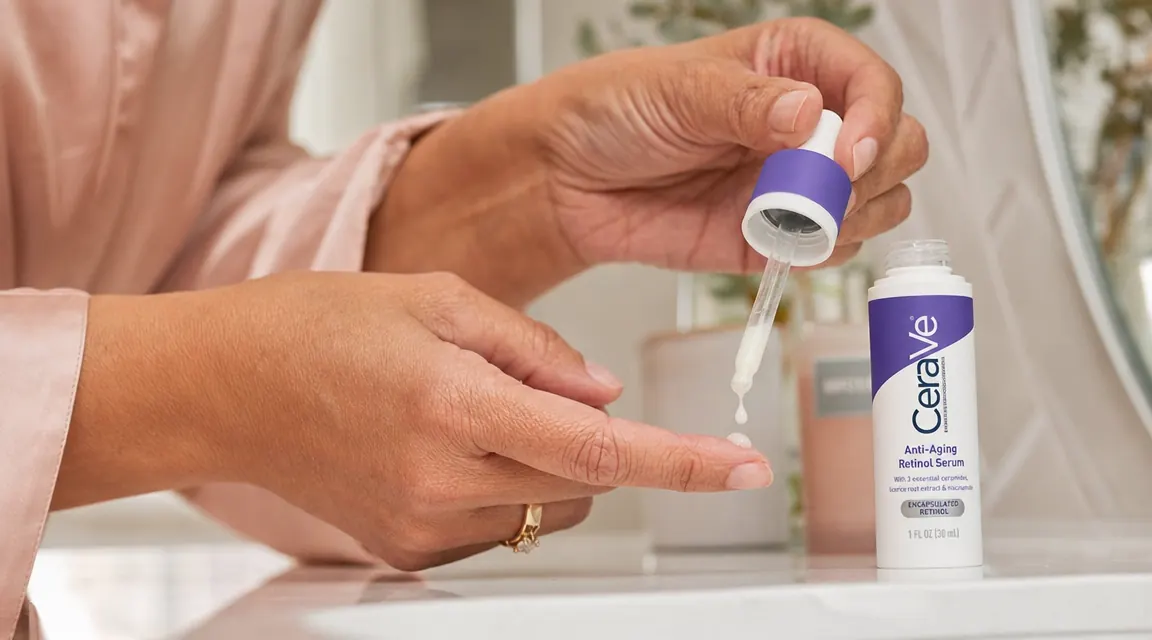
When I was working as an esthetician, the retinol conversation happened almost every appointment. Clients would come in having tried and abandoned three different serums, convinced their skin was "too sensitive" for the ingredient. In most cases, the skin was fine. The method was not. What I am going to walk you through here is the exact approach I used to introduce every new retinol client, starting slowly, building tolerance deliberately, and choosing a formula that makes the process far less disruptive. The CeraVe Retinol Serum is the one I recommend most often for first-timers, and I will explain why at each step.
If your skin has quit retinol before, the formula might be the missing piece.
The CeraVe Retinol Serum uses encapsulated retinol that releases gradually rather than all at once. For first-timers and sensitive skin, that distinction matters more than you might think. Over 27,000 reviewers on Amazon agree it is one of the gentler entries into retinol.
Amazon Check Today's Price on Amazon →Step 1: Set Your Starting Expectations and Timeline
Before you open the bottle, you need to understand what retinol actually does and how long it takes to do it. Retinol encourages faster cell turnover, which means your skin sheds its outer layer more quickly than usual. That is why you may see some flaking or feel mild tightness in the first two to four weeks. This is not damage. It is the skin adjusting to a new workload. The problem comes when people interpret that early sensitivity as a sign something is wrong and immediately apply more product to compensate, or layer on harsh actives to counteract the dryness. Both responses make things worse.
Plan for a four to six week onboarding period before you evaluate results. I know that feels slow. But the clients who commit to it are the ones who are still happily using retinol a year later. The ones who try to rush the process are the ones who end up on my table with a compromised barrier. Set a phone reminder for six weeks out to take stock of how your skin looks and feels. Do not judge the ingredient before you reach that marker.
Step 2: Start With One Night Per Week, Not Every Night
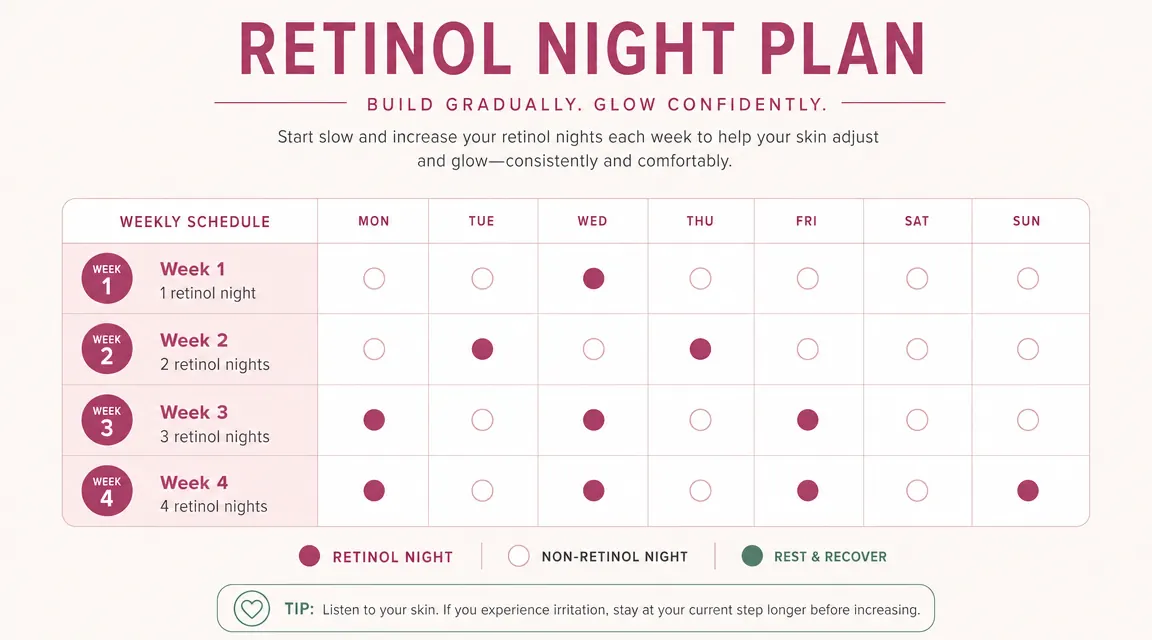
This is the step most instructions leave out, or bury in small print. In your first week, use retinol exactly once. One night, after cleansing, while skin is fully dry (wet skin drives the ingredient deeper and increases irritation risk), apply a pea-sized amount to your face. Follow immediately with your regular moisturizer. Then go to bed. That is the entire routine. Do not add anything else.
In week two, use it twice. Week three, three times. Week four, four times. This schedule is sometimes called the slow-start method, and it is the single most effective way to get through the adjustment period without significant irritation. Your skin needs time to upregulate its tolerance, and every extra day you give it between applications is a day of recovery. The CeraVe formula helps here too because the encapsulated retinol releases more gradually than traditional formulations, which keeps the delivery rate lower even on nights you do use it.
Step 3: Moisturize Before or After (or Both)
One of the most reliable ways to buffer retinol irritation is to apply a plain, fragrance-free moisturizer either before the retinol or immediately after. If your skin is on the drier or more reactive side, try the sandwich method: apply moisturizer first, wait two full minutes for it to absorb, then apply the retinol on top of that layer. The moisturizer dilutes the delivery slightly and acts as a physical barrier between the retinol and the most reactive surface cells. This is not "blocking" the ingredient. Research on the sandwich method shows it significantly reduces redness and flaking without meaningfully reducing long-term effectiveness.
If your skin is oilier or more resilient, you can apply retinol directly to clean, dry skin and follow with moisturizer on top. Either way, moisturizer after is non-negotiable. The CeraVe serum already contains hyaluronic acid and niacinamide in its formula, which cushion the barrier somewhat, but that is not a substitute for a full moisturizer on top. Think of the serum's built-in hydrators as a first layer of protection and your moisturizer as the finish coat.
Step 4: Know What Not to Combine With Retinol
Most retinol mistakes happen not from using too much retinol, but from using it alongside ingredients it conflicts with. Vitamin C is generally fine when used in the morning while retinol is used at night, but layering them in the same routine on the same night raises the irritation risk significantly. AHAs and BHAs, including glycolic acid, lactic acid, and salicylic acid, are the most common culprits. If you are using any exfoliating acids on a regular basis, move them to alternate nights rather than the same night as retinol. Your skin does not need to be exfoliated and encouraged to turn over simultaneously. That combination is precisely what produces the raw, sensitized barrier I see regularly.
Benzoyl peroxide is another to keep separate. It can deactivate retinol, meaning you would be doing the irritation work without getting the benefit. If you use benzoyl peroxide for acne, use it in the morning and reserve retinol for nights it is not in your routine. The general rule is simpler than it sounds: on retinol nights, the only other actives on your skin should be hydrating ones. Hyaluronic acid, niacinamide, ceramides, and peptides all pair well. Anything with an exfoliating or oxidizing action comes on a different night.
On retinol nights, the only other actives on your skin should be hydrating ones. Anything with an exfoliating or oxidizing action comes on a different night.
Step 5: Wear SPF Every Single Morning Without Exception
Retinol makes your skin more sensitive to UV exposure. That is not a reason to avoid it, but it is a firm reason to wear broad-spectrum SPF 30 or higher every morning, regardless of weather or whether you plan to be outside. This is the step I find the most clients skipping, and it is also the step most likely to cause visible skin problems if ignored. Sun exposure on skin that is actively turning over from retinol use can lead to hyperpigmentation, which is the opposite of what most people start retinol hoping to address.
Your morning SPF does not need to be complicated. A lightweight, non-comedogenic face sunscreen applied after your morning moisturizer is enough. If you are not currently wearing SPF daily, this step should actually happen before you start retinol. Make the SPF habit first, then introduce retinol once it is locked in. The combination of consistent retinol at night and consistent SPF in the morning is where the real long-term improvement to skin texture and tone tends to come from.
What Else Helps When Your Skin Is Adjusting
Even with the slow-start method, some people experience a week or two of mild flakiness or sensitivity around the nose and chin, the areas where skin tends to be thinner. A few things help during this window. First, drop to a richer, more occlusive moisturizer for the first month. A ceramide-heavy cream or a simple petrolatum-based ointment applied to dry patches at night does a better job of holding moisture in than a lightweight lotion. Second, resist the urge to exfoliate the flaky areas. Rubbing off flakes disrupts the barrier further and extends the adjustment period. Patch of dry skin on the cheek? Apply a small amount of your heaviest moisturizer directly to it and leave it alone. Third, keep an eye on whether what you are experiencing is normal adjustment or a true reaction. Normal adjustment looks like mild dryness, light flaking around the nose or mouth, and occasional tightness. A true reaction looks like persistent burning, swelling, or hive-like redness across the whole face. If you are in the second category, discontinue use and see a dermatologist. If you are in the first, stay the course and give your skin the time it is asking for.
If you want to read more about how the CeraVe formula specifically held up across four months of nightly use on sensitive skin, the full review covers the purging timeline, how it layers under a moisturizer, and what changes to expect in each month. For readers interested in other retinol applications, the Neutrogena Rapid Wrinkle Repair Eye Cream is designed specifically for the under-eye area, where a gentler formula and a different delivery format matter even more than on the rest of the face.
Ready to start? The CeraVe Retinol Serum is the gentlest on-ramp for first-timers.
Encapsulated retinol, niacinamide, and ceramides in one formula. No harsh initial spike in retinol delivery. It is the serum I reach for when someone tells me they tried retinol and had to stop. Most of them try this one and actually stick with it.
Amazon Check Today's Price on Amazon →