
The short answer: CeraVe Retinol Serum wins for most people, and it is not particularly close. At the budget end, it delivers encapsulated retinol alongside niacinamide and ceramides in a formula that genuinely tolerates sensitive skin. Paula's Choice 1% Retinol Treatment is a solid product, but its higher concentration and premium price tag make it harder to justify unless you have already built significant retinol tolerance and want to step up.
I spent eight weeks alternating these two serums, applying each to separate sides of my face on a nightly rotation so conditions were as close to identical as I could make them. My skin leans combination, occasionally reactive, and I was starting from a base of low retinol tolerance when the test began. Here is what I found.
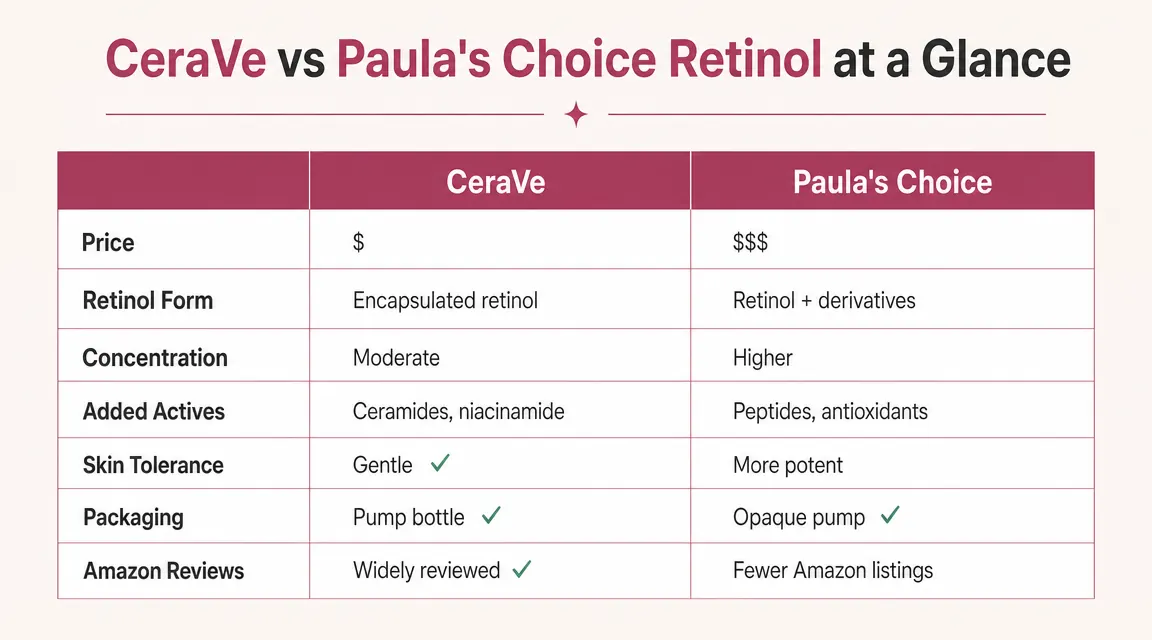
| CeraVe Retinol Serum | Paula's Choice 1% Retinol Treatment | |
|---|---|---|
| Current Price | Check today's price on Amazon | Check today's price on Amazon |
| Retinol Form | Encapsulated retinol (time-release) | Free retinol (standard delivery) |
| Retinol Concentration | Not disclosed / low-moderate | 1% stated on label |
| Supporting Actives | Niacinamide, hyaluronic acid, three ceramides | Vitamin C, panthenol, green tea extract |
| Fragrance | Fragrance-free | Fragrance-free |
| Texture | Light lotion-serum hybrid, absorbs quickly | Thin watery serum, very fast absorption |
| Irritation Risk for Beginners | Low | Moderate to high |
| Amazon Reviews | 27,800+, 4.6 stars | Not sold on Amazon |
| Packaging | Pump bottle | Dropper bottle |
Where CeraVe Wins
The encapsulation technology is the real story here. CeraVe wraps its retinol molecules in a shell that breaks down gradually as it sits on your skin, which means the ingredient releases more slowly than a standard free-retinol formula. That slower release is the main reason this serum causes less initial redness and peeling than higher-percentage alternatives, without sacrificing meaningful results over time. If you have been hesitant to start retinol because every review you have read mentions a brutal adjustment period, the CeraVe version is about as forgiving an entry point as you will find.
The supporting cast also matters. Niacinamide in the same formula helps offset the potential for temporary irritation, while the three ceramides work to shore up the skin barrier rather than tax it. Hyaluronic acid keeps moisture levels stable as your skin adjusts. These are not filler ingredients added to look good on the label. They do measurable work, and their presence means you need fewer products layered on top. In practice, I could use the CeraVe serum, follow with a basic moisturizer, and my skin felt settled by morning. On the Paula's Choice nights, I needed a richer barrier cream to prevent any tightness.
Price is the third argument, and it is a simple one. CeraVe runs in the budget range on Amazon with Prime shipping, is available at almost every drugstore, and can be repurchased without planning. Paula's Choice is sold primarily through its own site, runs over three times the price, and requires more deliberate budgeting. For retinol to work, you need to use it consistently for months. A product you can afford to keep buying every six to eight weeks will outperform a product you ration.
If you have been putting off retinol because you were waiting for the right one, this is it.
The CeraVe Retinol Serum is the most beginner-tolerant encapsulated retinol formula at this price point. Over 27,800 reviews and a 4.6-star rating back that up. Check today's price on Amazon before you read another comparison.
Amazon Check Today's Price on Amazon →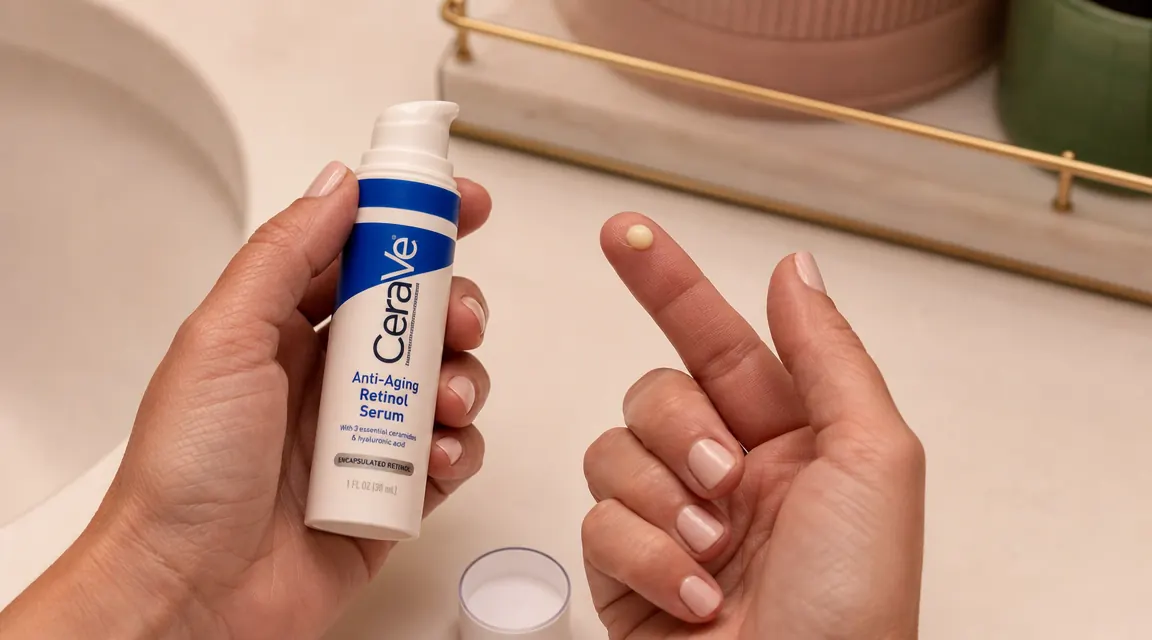
Where Paula's Choice Wins
Paula's Choice earns its reputation in a specific situation: experienced retinol users who have fully acclimated to lower concentrations and want to push efficacy higher. The 1% concentration label is unusual in the consumer skincare market. Most retinol products, including CeraVe, keep their percentages off the packaging entirely, which makes direct comparison difficult. But 1% is widely considered a high-end functional dose, and the antioxidant blend, including vitamin C and green tea extract, gives the formula a different supporting profile that some researchers consider complementary to retinol's mechanism.
The dropper packaging is also genuinely better for a watery serum. Each application is measured, which reduces waste and keeps the formula from oxidizing the way pump-bottle products sometimes do over time. If you are meticulous about your routine and prefer that kind of control, the format matters. Paula's Choice also publishes its full ingredient list with percentages and has built a brand identity entirely around ingredient transparency. For shoppers who want to know exactly what they are putting on their face, that level of disclosure is worth something.
Retinol works because you use it consistently, not because you paid more for it. A serum you can afford to repurchase every two months will do more for your skin than a premium formula you stretch to last four.
The Ingredient Comparison, Specifically
CeraVe uses encapsulated retinol, meaning the retinol is coated in a carrier that controls release rate. Paula's Choice uses free retinol at a stated 1% concentration. These are genuinely different delivery systems, not marketing variations. Encapsulated retinol tends to show a slower onset of visible results but also a slower onset of irritation. Free retinol at 1% may show faster visible change in skin texture and tone but carries a meaningfully higher risk of dryness, peeling, and sensitivity, especially in the first four to six weeks.
The other ingredient I want to call out is niacinamide, which CeraVe includes and Paula's 1% formula does not. Niacinamide supports the skin barrier, helps regulate sebum production, and may reduce the appearance of pores and uneven tone over time. Having it in the same bottle as retinol means you are treating multiple concerns without layering in an extra serum step. For most people who are shopping for a retinol because they noticed texture changes, dullness, or fine lines, the CeraVe formula addresses the whole picture rather than just the retinol piece.
Real-Skin Results After Eight Weeks
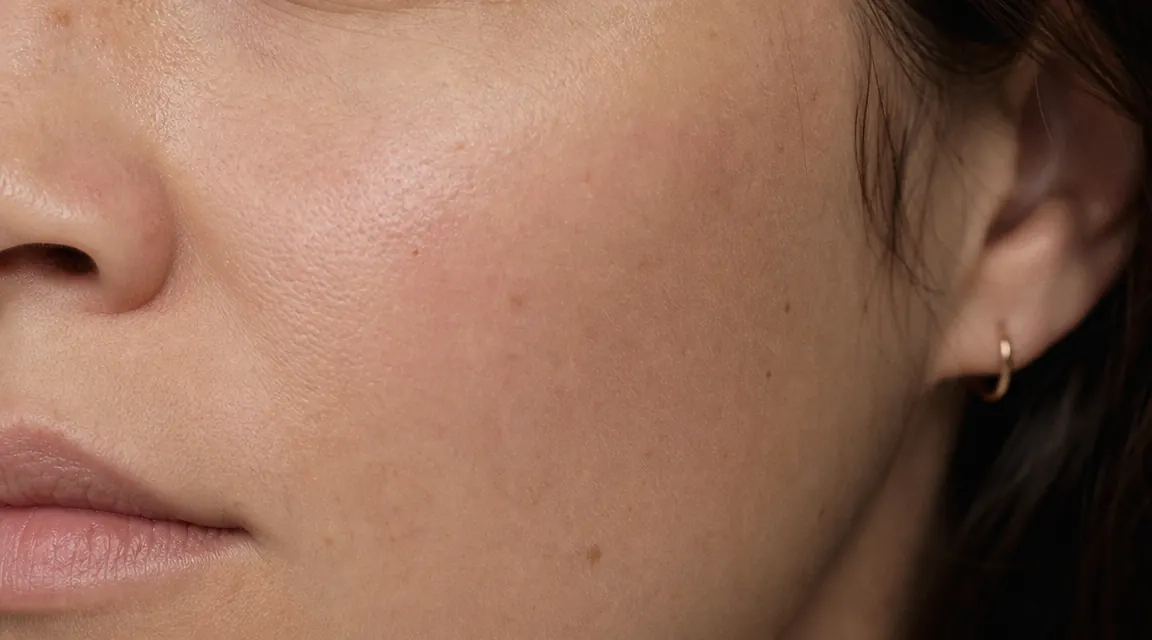
By week three on the CeraVe side, I noticed my skin looked more even-toned under the eye area where I extended application cautiously. The forehead texture, which had been slightly rough, smoothed noticeably by week five. I did not experience peeling on that side at any point, though I started slowly with two nights per week before moving to nightly use.
The Paula's Choice side was more eventful. Week one and two brought visible flaking at the temple and some intermittent redness the mornings after application. I backed off to every third night for two weeks, which resolved the irritation. By week seven, once my skin had adjusted, the results on that side of my face did look slightly sharper in terms of fine line reduction. But the adjustment period was real and took deliberate management. Anyone going into Paula's Choice expecting a smooth first month is going to be disappointed.
At the end of eight weeks, both sides of my face looked noticeably better than they did at the start. The CeraVe side got there with less drama and at a fraction of the cost. The Paula's Choice side edged ahead on fine line depth specifically, but not in a way that would be obvious to anyone but me in a controlled before-and-after comparison.
Who Should Buy Which
CeraVe is the right choice for retinol beginners, for anyone with sensitive or reactive skin, for combination and dry skin types who need the ceramide barrier support, and for anyone who wants consistent results without managing a difficult adjustment period. It is also the right choice for people who travel, who forget to reorder until they run out, or who simply want a workhorse product that does not require a second mortgage. That covers the majority of people asking this question.
Paula's Choice 1% Retinol Treatment makes sense for people who have been using a low-concentration or encapsulated retinol for at least six months, have zero sensitivity issues with their current formula, and specifically want to push to a higher functional dose. It is not a bad product. It is just a product with a narrow ideal-user profile, and most people reading a comparison like this one are not inside that profile yet.
One more thing worth saying plainly: the Paula's Choice brand does a lot of marketing around the idea that higher concentrations equal better results. That is true up to a point, and then it becomes diminishing returns with increasing irritation risk. The CeraVe encapsulated formula delivers real retinol activity at a pace your skin can actually tolerate. The idea that you must pay premium prices to get a retinol that works is not supported by the evidence.
Most skin types do better with CeraVe. Here is why 27,000 shoppers agree.
The CeraVe Retinol Serum pairs encapsulated retinol with niacinamide and ceramides in a fragrance-free formula that works without wrecking your moisture barrier. Check today's price on Amazon to see if it is in stock.
Amazon Check Today's Price on Amazon →