
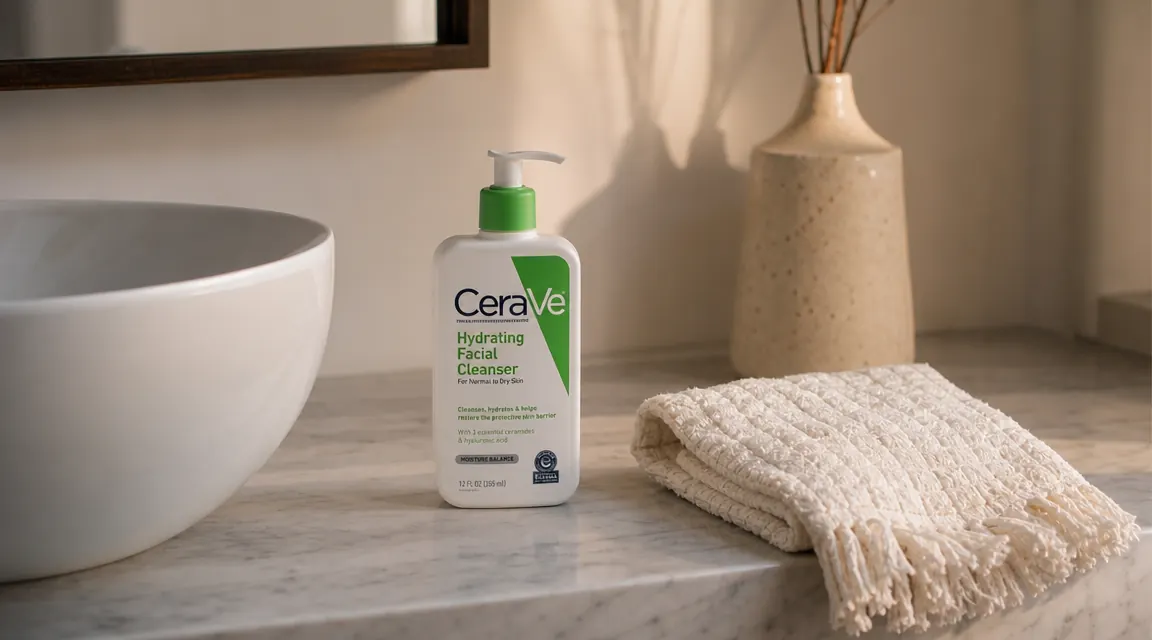
I washed my face with the CeraVe Hydrating Facial Cleanser every single morning and every single night for one full year. No backup cleanser. No switching to a foaming wash on heavy-sunscreen days. Just this pump bottle, 365 days straight. I wanted to know whether a budget drugstore cleanser with 130,000 reviews actually holds up the way its fans say it does, or whether that rating is propped up by sheer volume and low expectations.
I am Casey Lane. I spent eight years as a licensed esthetician before I burned out on giving facials and started doing this instead. I review skincare products with the same close attention I gave clients in the treatment room. What I care about: does it clean effectively without compromising the skin barrier, does it work across seasons, and does it play nicely with the other products on your shelf. The CeraVe Hydrating Facial Cleanser earns a cautious yes on all three. But there is nuance worth knowing before you buy.
The Quick Verdict
A reliably gentle, barrier-friendly daily cleanser that is hard to misuse and genuinely well-formulated. Best for dry, normal, and sensitive skin. Not the right call if you wear heavy makeup or live in a humid climate.
Amazon Check Today's Price →If your skin still feels tight five minutes after washing, this is probably the fix.
The CeraVe Hydrating Facial Cleanser replaces harsh cleansers without sacrificing thorough cleansing. Over 130,000 Amazon buyers have made it their daily driver.
Amazon Check Today's Price on Amazon →How I Used It
I started in May of last year. My skin at the time: combination-dry, reactive to fragrance, prone to flushing on the cheeks. I was coming off a few months of using a gel cleanser with salicylic acid that I had convinced myself was necessary for pore clarity. My skin disagreed. It was tight, dull, and slightly flaky at the temples by noon. The esthetician in me knew what was happening: I was over-cleansing and stripping the lipid layer faster than my barrier could rebuild it.
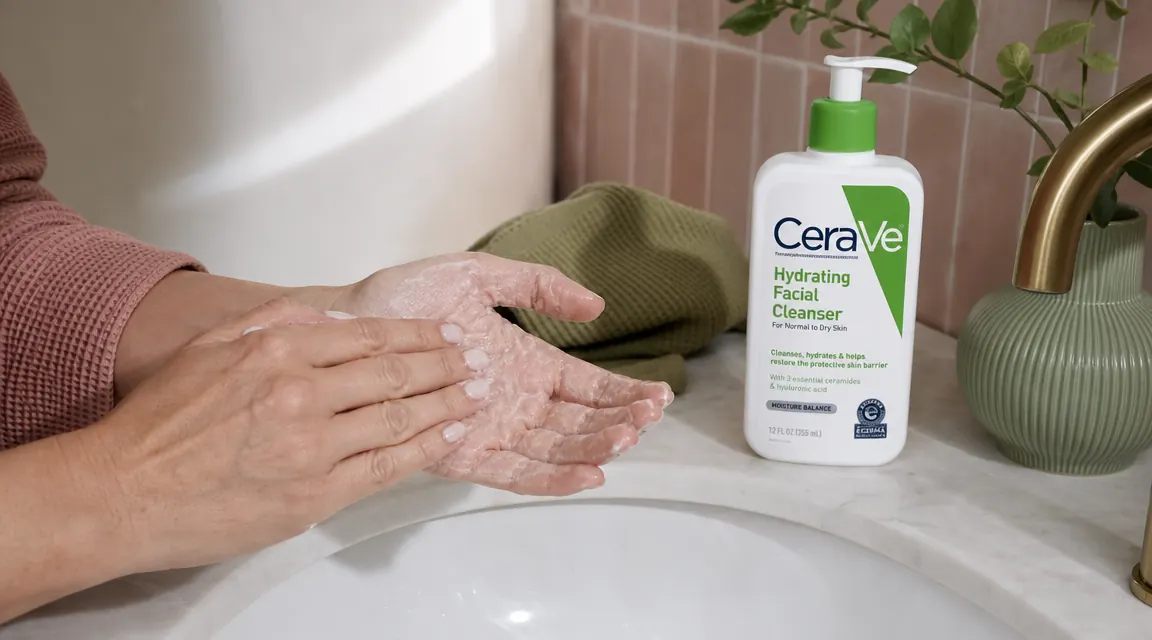
I used two pumps morning and evening, worked it in with my fingertips for about 45 seconds, then rinsed with lukewarm water and patted dry. That was it. No washcloth, no brush, no secondary rinse with micellar water. On evenings when I wore SPF 50 mineral sunscreen (which is most evenings, since I test a lot of sunscreens), I double-cleansed first with a cleansing balm, then followed with CeraVe as the second step. This matters because the CeraVe is not designed to emulsify mineral sunscreen on its own, a point I will come back to.
I kept everything else consistent. Same moisturizer (a ceramide-heavy cream I have used for two years), same SPF in the morning, same retinol serum twice a week at night. The only variable was the cleanser. If something changed in how my skin looked or felt, I could trace it back here.
What the Formula Is Actually Doing
The CeraVe Hydrating Facial Cleanser is a micellar-type, surfactant-light formula. The primary cleansing agents are cocamidopropyl hydroxysultaine and sodium lauroyl lactylate. Neither of these is particularly aggressive. Cocamidopropyl hydroxysultaine is commonly paired with other surfactants precisely because it is gentle enough to reduce the irritation potential of harsher cleansers. Sodium lauroyl lactylate is derived from lactic acid and lauric acid and works at a skin-friendly pH.
The formula also includes three essential ceramides (ceramide NP, ceramide AP, ceramide EOP), hyaluronic acid, and niacinamide. I want to be honest about the role those ingredients play in a rinse-off product. You are not going to see transformative results from the ceramides or hyaluronic acid in a cleanser that is on your face for 60 seconds before rinsing down the drain. Their function here is more protective, limiting how much the cleansing step strips away rather than actively replenishing. That is a meaningful distinction and a realistic expectation to hold.
What matters most is that the pH is appropriate (reportedly around 5.5, close to the skin's natural range) and that the formula does not include fragrance, essential oils, or drying alcohols. In a cleanser, the absence of irritants is just as important as the presence of good ingredients.
How My Skin Responded Over Twelve Months
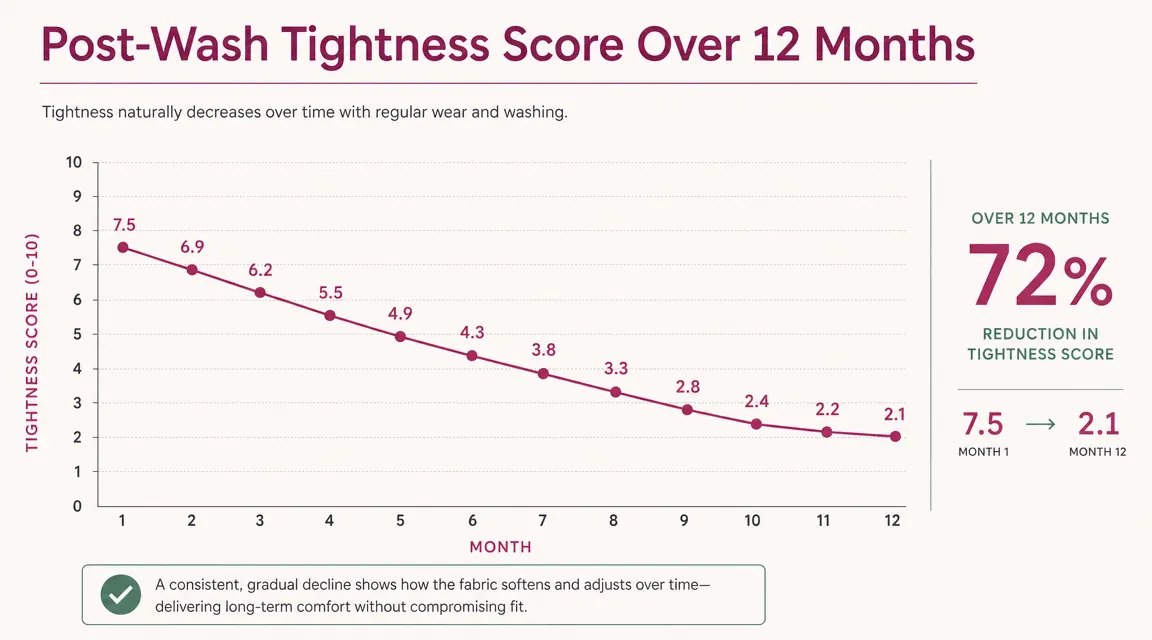
The first two weeks were unremarkable in the best possible way. No breakout. No flaking. No adjustment period. My skin stopped feeling tight after washing within about four days. By week three, I noticed I was using less moisturizer in the morning because my skin was starting from a less depleted baseline. That is the thing about a good cleanser: the benefit is not what it adds, it is what it stops taking away.
By week three, I was using less moisturizer in the morning. My skin was starting from a less depleted baseline. That is the quiet benefit of a cleanser that does not strip.
Through summer, it performed without complaint even on days when I sweated through sunscreen at the beach. It did require a proper double-cleanse on those nights. Tried it alone on a sunscreen-heavy day in July and woke up with a small cluster of closed comedones along my jawline. One double-cleanse session cleared them within a week. That was the only breakout I can trace directly to this product, and it was entirely my fault for skipping the first cleansing step.
Fall and winter are where this cleanser earns genuine loyalty from me. Cold, dry air is the enemy of barrier function. The typical response from people's skin is more tightness, more dehydration, more irritation after washing. With CeraVe, none of that happened. My skin went through a Minnesota November feeling more stable than it had during the same period the year before, when I was using a foam cleanser. I kept notes. The difference was noticeable enough that I flagged it in my testing log.
The Real Performance Limits
Here is where I have to be straight with you. The CeraVe Hydrating Facial Cleanser is not a makeup remover. It does a decent job on light tinted moisturizer or mineral-only SPF. It does not adequately remove a full face of foundation, concealer, and setting spray. If you wear heavy makeup most days and try to use this as your only cleanser, you will likely experience the same closed comedones I got from my sunscreen experiment. The solution is to use a cleansing balm or micellar water first, then follow with CeraVe as the second cleanser.
I also noticed it leaves a slight film on skin when used in very hard water. If you have extremely mineral-heavy tap water, you may feel like it is not fully rinsing off. It is not harmful, but it can feel slightly waxy. Splashing with cooler water at the end of the rinse seems to help. This is not unique to CeraVe but it is more noticeable here than with gel cleansers that rinse more aggressively.
One more limitation worth naming: oily skin in humid climates. I have had clients with consistently oily, acne-prone skin who tried CeraVe Hydrating Cleanser on my recommendation and came back underwhelmed. They did not break out, but they also felt like their skin was not clean enough by midday. For true oily skin, a gentle gel cleanser with a slightly higher surfactant load may be more appropriate. The CeraVe Foaming Facial Cleanser is the brand's own answer to that.
What I Liked
- Genuinely non-stripping formula that supports barrier function over time
- No fragrance, no essential oils, no drying alcohols
- Suitable for sensitive and reactive skin, including rosacea-prone types
- Performs consistently across seasons, including cold dry winters
- Price per wash is remarkably low with the large pump bottle
- Works well as a second-step cleanser in a double-cleanse routine
- Fragrance-free and safe for contact lens wearers near the eye area
Where It Falls Short
- Does not adequately remove heavy makeup or mineral sunscreen on its own
- Can leave a slight film in very hard tap water
- Micellar-type cleanse may feel insufficient for consistently oily or acne-prone skin
- The pump dispenses a lot of product at once, leading to some waste if you use a small amount
How It Compares to the Alternatives I Have Tried
I have used a lot of cleansers in my career. A few worth comparing directly: La Roche-Posay Toleriane Hydrating Gentle Cleanser is the closest competitor and has a similar philosophy. It is slightly richer in texture, slightly more expensive, and I have found it performs better as a standalone cleanser for people who wear very light makeup and minimal SPF. For a double-cleanse second step on a full-face makeup day, CeraVe is equally effective and meaningfully cheaper.
The Neutrogena Ultra Gentle Daily Cleanser is another commonly recommended option in the same price bracket. Compared side by side, CeraVe rinses slightly more cleanly and the texture feels less watery. The Neutrogena is fine but does not feel as purposefully formulated around barrier support. If you are choosing between the two at the drugstore, I would reach for CeraVe.
I also tested the Vanicream Gentle Facial Cleanser during this same year as a morning-only comparison for four weeks. Vanicream is even more minimal than CeraVe, which some people prefer. My skin did not notice a meaningful difference between the two on a day-to-day basis, but I found the CeraVe pump bottle more practical. If you are on an extremely tight budget or have a severe contact dermatitis history, Vanicream is worth a look. For everyone else, CeraVe is the easier call. You can also read my full comparison in the CeraVe vs Neutrogena Hydro Boost Cleanser head-to-head if you are still deciding.

Who This Is For
The CeraVe Hydrating Facial Cleanser is genuinely well-suited for anyone with dry, normal, or sensitive skin who wants a reliable daily cleanser that does not require thinking about. If your skin tends toward dehydration, if you flush easily, if fragrance makes you reactive, if you live somewhere with cold winters, or if you have been using a foamy gel cleanser and your skin consistently feels tight afterward, this is a strong and well-priced option. It is also an ideal second step in a double-cleanse routine for people who wear sunscreen and moderate makeup daily. If you are building or refining your routine, this article on why switching to a gentle cleanser can improve your skin quickly is a useful companion read.
Who Should Skip It
If your skin is consistently oily and you break out along the hairline and jawline regularly, this cleanser may not provide enough cleansing action for your needs. It is also not a good single-step option if you wear full coverage foundation, heavy powder, or water-resistant SPF and do not want to double-cleanse. People who prefer a cleanser that produces a significant lather will find this underwhelming. It does produce some foam with enough agitation, but it is minimal, and some people interpret that as insufficient cleansing even when it is not.
A cleanser your skin barrier will not fight you on, for a budget-friendly price.
After one year and through every season, the CeraVe Hydrating Facial Cleanser is still the first product I reach for. Check the current price on Amazon and see why it has earned 130,000 reviews.
Amazon Check Today's Price on Amazon →